
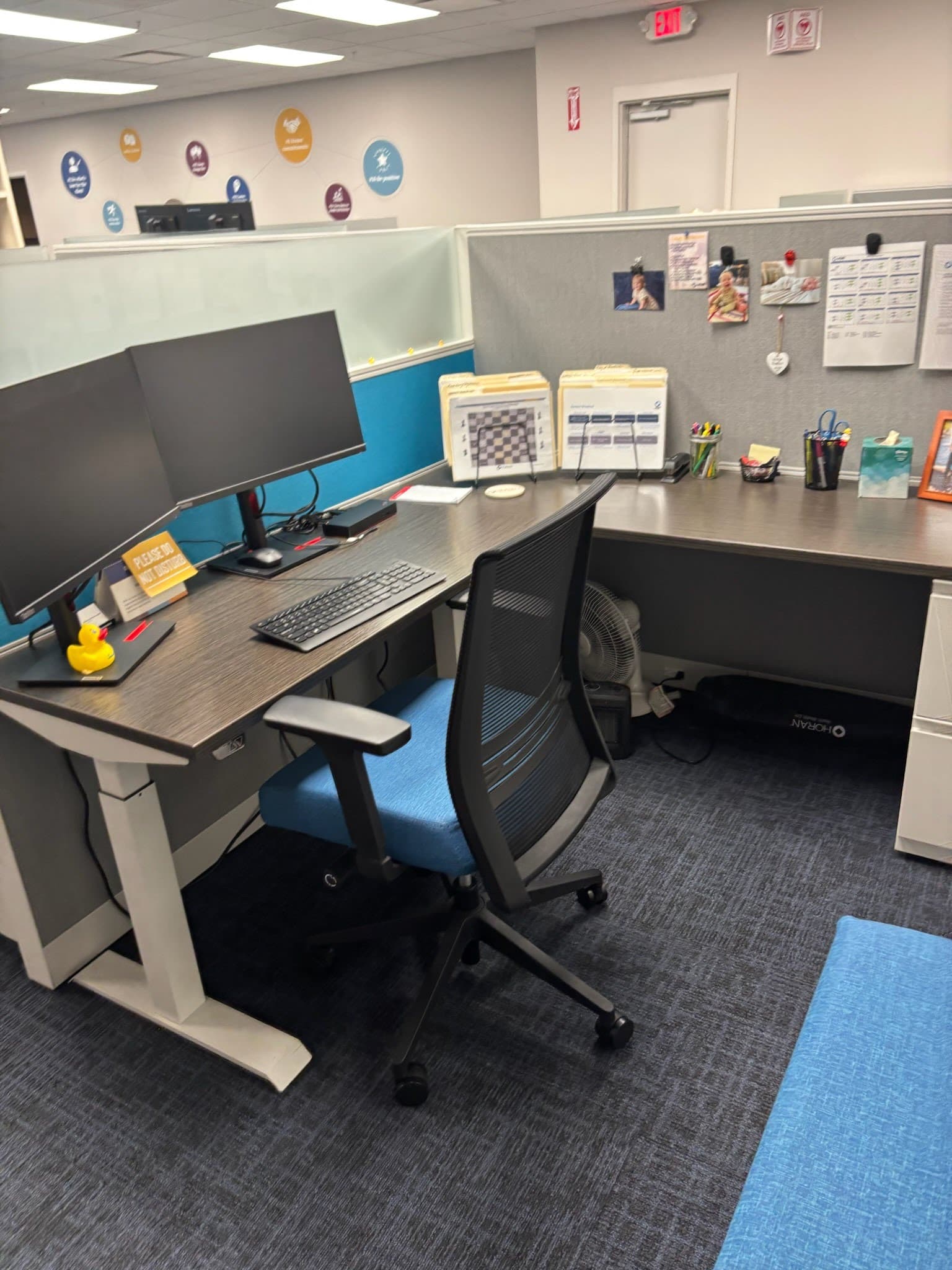
Practical office cleaning template

Commercial Office Cleaning Checklist: Every Visit, Scheduled & Periodic Tasks

A good office cleaning checklist should do more than list random tasks. It should define what gets cleaned, how often it gets cleaned, and what is included in the cleaning company's responsibility.

The right checklist will vary from one office to another, but most commercial workplaces can build their cleaning program around three levels: Every Visit, Scheduled Detail, and Periodic.

Below is a practical commercial office cleaning checklist that can be adapted to the size, traffic, layout, and operating schedule of the facility.

How to read the checklist

Every Visit, Scheduled Detail & Periodic

Every Visit
Routine tasks needed whenever the cleaning crew services the office, whether service occurs five times per week, three times per week, weekly, or on another schedule.
Scheduled Detail
Work completed on an agreed rotation rather than necessarily every visit.
Periodic
Deeper or less-frequent tasks performed when required or included in the service plan.

Checklist overview

Office Cleaning Checklist at a Glance

Commercial office cleaning tasks by area and service frequency
AreaEvery VisitScheduled DetailPeriodic
Reception & LobbyTrash, floors, touchpoints, visible glassDetailed dusting, doors, furniture detailBaseboards, deeper glass/detail work
Workstations & OfficesTrash, floors, accessible cleared surfacesDetailed dusting, chairs, shelvingHigh dusting, baseboards, deeper detailing
Conference RoomsTables, trash, floors, touchpointsChairs, glass, detailed surfacesBaseboards and deeper detailing
BreakroomsCounters, sinks, tables, trash, floorsAppliance exteriors, cabinets, detailed surfacesAppliance interiors if included, deeper cleaning
RestroomsToilets, sinks, mirrors, fixtures, touchpoints, floors, trashPartitions, detailed fixtures and edgesDeeper detail work as required
Common AreasFloors, trash, touchpointsFurniture/detail dustingBaseboards, high dusting
FloorsVacuum, sweep or mopEdge/detail cleaningCarpet extraction, floor maintenance or refinishing

This is a starting point. A commercial cleaning company should customize the checklist to the actual building rather than forcing every office into the same template.

Client-facing spaces

Reception and Lobby Cleaning Checklist

Reception areas create the first impression of the workplace, so visible cleanliness matters more here than almost anywhere else.

Every Visit

  • Empty trash and recycling
  • Vacuum carpet or sweep/mop hard floors
  • Clean entrance-area floors
  • Wipe accessible high-touch surfaces
  • Clean door handles and touchpoints
  • Clean visible fingerprints from accessible interior glass
  • Straighten the general appearance of the reception area
  • Wipe reception surfaces where accessible and clear

Scheduled Detail

  • Detailed dusting of furniture and accessible surfaces
  • Clean door surfaces and frames as included
  • Detail chairs and waiting-area furniture
  • Clean glass more thoroughly
  • Address floor edges and corners

Periodic

  • Baseboard detailing
  • High dusting
  • Deeper glass cleaning
  • Carpet extraction or hard-floor maintenance where required

Employee work areas

Offices and Workstations

Workstations require a clear boundary between cleaning and disturbing employees' property.

Horton can clean accessible, cleared desk and workstation surfaces, but papers, files, personal belongings, electronics, and other items should not be moved unless that responsibility has been specifically agreed.

Every Visit

  • Empty trash and recycling
  • Vacuum, sweep, or mop floors
  • Clean accessible cleared desk surfaces
  • Wipe accessible high-touch points
  • Address visible dust on agreed surfaces
  • Clean chair contact areas where included
  • Spot-clean visible marks where practical

Scheduled Detail

  • More detailed dusting
  • Clean accessible shelving or cabinet surfaces
  • Detail chairs
  • Address edges and corners
  • Clean accessible office glass

Periodic

  • Baseboards
  • High dusting
  • Vents or higher surfaces where included
  • Carpet extraction
  • Detailed floor care

The cleaning checklist should clearly state what the cleaning team may and may not move.

Shared collaboration spaces

Conference and Meeting Rooms

Meeting rooms often look clean at first glance while fingerprints, crumbs, dust, and floor buildup accumulate quickly.

Every Visit

  • Empty trash
  • Wipe tables
  • Clean accessible touchpoints
  • Vacuum or clean floors
  • Address visible marks on accessible surfaces
  • Reset general appearance where appropriate

Scheduled Detail

  • Detail chairs
  • Dust additional surfaces
  • Clean interior glass where included
  • Detail table bases, edges, and surrounding areas

Periodic

  • Baseboards
  • High dusting
  • Carpet extraction or floor maintenance
  • Deeper detailing as required

Food and high-contact areas

Breakroom and Kitchenette Cleaning Checklist

Breakrooms usually need more attention than ordinary office areas because food, spills, trash, and frequent surface contact are involved.

Every Visit

  • Empty trash
  • Clean counters
  • Clean sinks
  • Wipe tables
  • Clean accessible high-touch surfaces
  • Wipe exterior appliance surfaces where included
  • Sweep and mop floors
  • Address visible spills

Scheduled Detail

  • Detail appliance exteriors
  • Clean cabinet fronts where included
  • Detail backsplash and surrounding surfaces
  • Address corners and floor edges

Periodic or Scope-Based

  • Microwave interior
  • Refrigerator interior
  • Detailed cabinet cleaning
  • Deeper appliance cleaning

Appliance interiors should not automatically be assumed to be part of routine office cleaning. They should be specifically included in the cleaning scope or handled during a deeper cleaning service.

Sanitation and appearance

Restroom Cleaning Checklist

Restrooms are one of the most important parts of a commercial cleaning program because usage, odor, appearance, and sanitation can quickly affect employee and visitor perception.

Every Visit

  • Clean toilets and urinals where applicable
  • Clean sinks
  • Clean mirrors
  • Wipe counters
  • Clean fixtures
  • Address high-touch surfaces
  • Empty waste containers
  • Sweep and mop floors
  • Clean visible spills and soil
  • Check restroom condition

Scheduled Detail

  • Detail partitions
  • Clean fixture edges and harder-to-reach surfaces
  • Detail doors and touchpoints
  • Address corners and floor edges
  • Remove buildup where appropriate

Periodic

  • Deeper fixture detailing
  • Baseboards
  • High dusting
  • Detailed wall/partition cleaning where required

What About Toilet Paper, Soap and Paper Towels?

Horton supplies the cleaning chemicals, tools, and equipment used to perform the cleaning service.

Facility consumables—such as toilet tissue, paper towels, hand soap, trash liners, and dispenser supplies—can be handled or restocked through a separate arrangement.

That should be clearly defined in the cleaning agreement so there is no confusion over who is responsible for purchasing or maintaining supplies.

Surface-specific maintenance

Office Floor Cleaning Checklist

Floor care is not one task. Carpet, hard floors, entrances, and heavily traveled areas can all need different maintenance.

Every Visit

  • Vacuum carpet
  • Sweep hard floors
  • Mop hard floors
  • Address visible debris
  • Spot-clean accessible spills
  • Pay attention to entrances and high-traffic areas

Scheduled Detail

  • Edge cleaning
  • Detail corners
  • Address heavier traffic areas
  • More detailed spot treatment where appropriate

Periodic

  • Carpet extraction
  • Hard-floor maintenance
  • Floor stripping and refinishing
  • Other restorative floor work

Periodic floor services may be included in a broader maintenance plan or quoted separately depending on the facility.

Commercial Floor Care Services

Shared spaces

Common Areas, Hallways and Shared Spaces

Shared areas can accumulate traffic-related soil even when no single employee is responsible for them.

Every-visit tasks may include floors, trash, touchpoints, and visible surfaces. Scheduled work can include additional furniture detailing and dusting, while periodic work may include high dusting, baseboards, glass detail, and deeper floor care.

The exact checklist should reflect how heavily these spaces are used.

Visible touchpoints

Interior Glass, Doors and Touchpoints

Accessible interior glass can be part of routine office cleaning, particularly where fingerprints are highly visible.

Routine attention may include entrance-door glass, internal door glass, handles, push plates, accessible partitions, and other frequently touched surfaces.

More extensive or detailed glass cleaning can be placed on a scheduled or periodic rotation depending on the building.

This keeps the routine checklist realistic without pretending every piece of glass requires full detailing during every visit.

Rotated detail work

High Dusting, Baseboards and Detail Work

Some cleaning tasks are important but do not need to happen every time a crew enters the building.

Examples include baseboards, vents, upper ledges, higher surfaces, detailed edges and corners, less-accessible dusting, and deeper glass detailing.

These are normally better handled through a scheduled rotation or periodic cleaning plan based on the facility.

A good commercial checklist assigns the right frequency to each task instead of simply saying "clean everything every day."

Customized schedules

How Often Should These Tasks Be Completed?

There is no universal frequency that works for every office.

A busy office serviced five times per week may complete its Every Visit checklist five times per week. Another office may only need service three times per week or weekly.

The categories describe when a task happens relative to the cleaning schedule, not a rigid calendar requirement.

5x/week office

  • Every Visit: Monday through Friday
  • Scheduled Detail: selected tasks rotated during the week
  • Periodic: monthly, quarterly, or according to the agreed plan

3x/week office

  • Every Visit: each of the three scheduled service days
  • Scheduled Detail: rotated across visits
  • Periodic: completed on an agreed schedule

The cleaning frequency should follow the actual traffic, restroom use, floor condition, employee activity, visitor activity, and expectations of the facility.

Define the scope

How to Use This Checklist With a Cleaning Company

A checklist becomes much more useful when it is turned into an actual scope of work.

Before approving a commercial cleaning agreement, make sure the checklist answers:

  • Which rooms are included?
  • Which tasks happen every visit?
  • Which tasks are rotated?
  • Which services are periodic?
  • Who handles consumables?
  • Is deeper floor care included?
  • Are appliance interiors included?
  • What surfaces can the crew move or access?
  • What happens when something is repeatedly missed?
  • Who is responsible for quality control?

Two cleaning companies can quote the same building and provide completely different scopes. That is why comparing only the monthly price can be misleading.

Office Cleaning Cost in Dayton, Ohio

Facility-specific planning

How Horton Builds an Office Cleaning Checklist

Horton Enterprise LLC starts with the building rather than a generic template.

During a free facility walkthrough, the team reviews the layout, work areas, restrooms, shared spaces, floors, traffic, operating schedule, current cleaning concerns, and any periodic work that may be required.

From there, Horton creates a facility-specific cleaning scope that identifies:

Every Visit tasks
What needs to happen whenever the office is serviced.
Scheduled Detail tasks
Work that should be completed on a rotation.
Periodic tasks
Deeper or less-frequent services that should happen when required.

Horton provides its own cleaning chemicals, tools, and equipment, and customer consumables can be handled separately when requested.

Horton uses trained, background-checked cleaners and supports office accounts through quality checks and clear communication.

Office Cleaning Services in Dayton, Ohio

Schedule a Free Facility Walkthrough

Direct answers

Office Cleaning Checklist Questions

What should be included in an office cleaning checklist?

A commercial office cleaning checklist should normally define tasks for workstations, reception areas, conference rooms, breakrooms, restrooms, common areas, floors, glass, trash removal, dusting, and high-touch surfaces. The exact scope should be customized to the building.

Should office desks be cleaned?

Accessible, cleared desk surfaces can be cleaned when included in the scope. Cleaning crews generally should not move papers, files, personal belongings, or equipment unless that responsibility has been specifically agreed.

Should office cleaning include the inside of refrigerators and microwaves?

Not automatically. Appliance interiors are better defined as scope-based or periodic work and can be included when specifically requested.

Should restocking supplies be part of office cleaning?

It can be, but the agreement should make the responsibility clear. Horton provides cleaning chemicals, tools, and equipment. Facility consumables such as paper towels, toilet tissue, soap, and trash liners can be handled through a separate arrangement.

Are baseboards and vents cleaned every visit?

Usually not. Baseboards, vents, high surfaces, and similar detail work are often placed on a scheduled or periodic rotation based on the needs of the facility.

Should every office use the same cleaning checklist?

No. Office size, traffic, restrooms, floor types, operating schedule, employee activity, and customer expectations can all change what should be cleaned and how frequently.

How do I get a customized office cleaning checklist?

A facility walkthrough is the best starting point. Horton can review the office, identify the required tasks and frequencies, create the cleaning scope, and provide a customized quote.

Qualified commercial walkthrough

Build a Cleaning Checklist Around Your Actual Office

A printable template can help organize the basics. A working commercial cleaning program should go one step further. If your office is in Dayton, Kettering, Centerville, Springboro, or Bellbrook, Horton Enterprise LLC can walk the facility, identify what needs attention, organize the work into appropriate frequencies, and build a checklist around the way the office actually operates.

Request a facility walkthrough online anytime. After-hours cleaning is available by arrangement.

1. Contact2. Facility
Contact information
Facility and cleaning scope

By submitting this form, you agree that Horton Enterprise may contact you regarding your facility-cleaning inquiry. See the Privacy Policy.